|
IN CELEBRATION OF All Things Historical doctor Myrup proudly presents his SEMI-ANNUAL LIST OF HISTORY COURSES (SPRING 2017 EDITION)
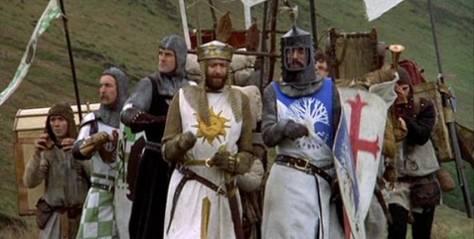
PLEASE come JOIN IN
the QUEST----
TO seek the perfect COURSE For questions, please contact Dr. Erik Myrup.
|
|
UK Core Courses |
|
|
UKC 181 - America and the
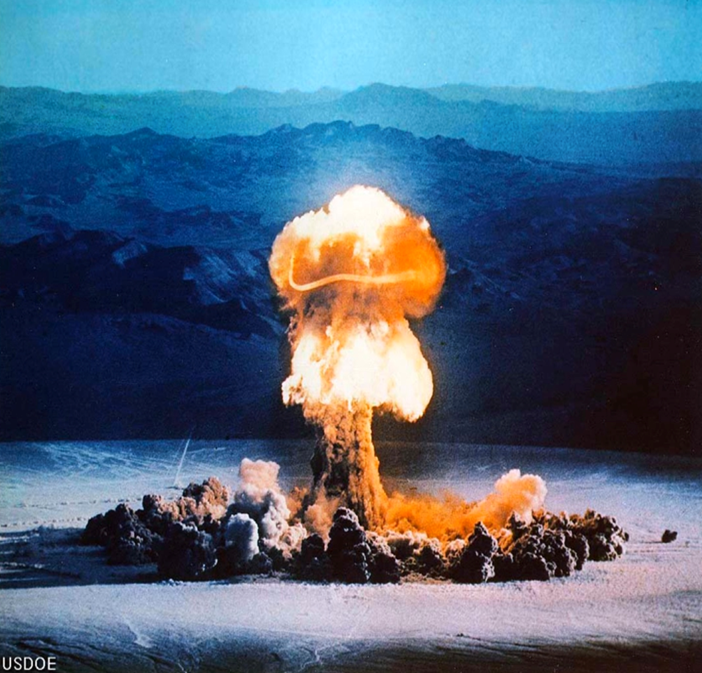
Cold War, 1945-1991 (Dr. Mark Summers) Lecture: TR 11:00-12:15 The Iron Curtain, a nuclear arms race, the making of NATO, a wall in Berlin, Coca-Colonialism, isolationism, Asialationism, the Common Market, and uncommon sense. People get shot, lawful governments get overthrown, public officials lie like statistics, and we never learn to stop worrying and love the Bomb. Lots of music and pictures! (Click here for an interview with Dr. Summers; additionally, here is an article on Dr. Summers the cartoonist.) UK CORE: U.S. Citizenship, 3.0 credits. |
![]() |
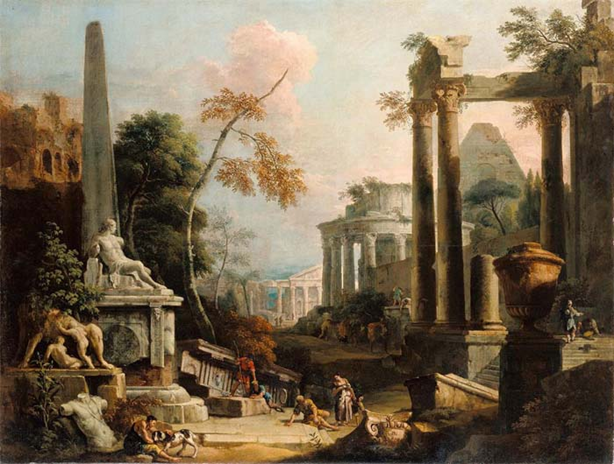
HIS 104 - History of Europe
through Mid-17th Century (Dr. Bruce Holle) Lecture: MW 12:00-12:50 Recitation Options: W
1:00-1:50, W 2:00-2:50, F 11:00-11:50, F 12:00-12:50 UK CORE: Humanities/Global Dynamics, 3.0 credits. |
![]() |
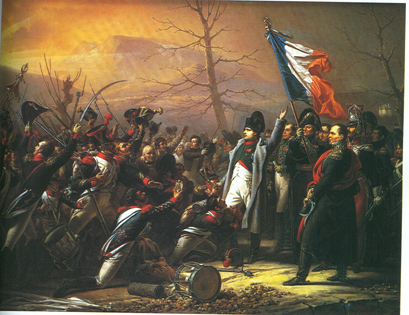
HIS 105 - History of
Europe, 1648 to the Present (Dr. Tammy Whitlock) Lecture: TR 11:00-11:50 Europe, the universe and everything starting with the colonization of the Americas and ending with the recent birth of Prince George. Answers burning questions like “Why don't we have a monarch?” and “Was empire a really bad idea?” (Click here for an interview with Dr. Whitlock. [Dr. Whitlock's part begins at 17:22.]) UK CORE: Humanities/Global Dynamics, 3.0 credits. |
![]() |
HIS 108 - History of U.S.
through 1876 (Dr. Amy Taylor) Lecture: MW 10:00-10:50 Recitation Options: W
11:00-11:50, W 12:00-12:50, R 2:00-2:50, F
9:00-9:50, A survey of U.S. history from the first British settlements c. 1585 to the end of Reconstruction in 1876, exploring the most important events, ideas, and people that created the foundations of the American nation. (Click here to watch Dr. Taylor talk about teaching at UK; and click here to watch her speak on C-SPAN.) UK CORE: U.S. Citizenship/Humanities, 3.0 credits. |
![]() |
HIS 109 - History of U.S.
since 1877 (Dr. Mark Summers) Lecture: MW 9:00-9:50 Recitation Options: M
4:00-4:50, T 2:00-2:50, W 10:00-10:50, W
11:00-11:50, Examines U.S. history from
1877 to the present, including the Gilded Age, the
Progressive Era, the New Deal, the Age of Affluence,
the Great Society, and two Great Wars. You will find
out how much and how little America has lived up to
its ideals, how it grew from a nation of farms and
cotton mills to an industrial giant, and how it became
a world power. Lots
of music and pictures! (Click here
for an interview with Dr. Summers; additionally, here
is an article on Dr. Summers the cartoonist.) UK CORE: U.S. Citizenship/Humanities, 3.0 credits. |
![]() |
HIS 122 - War and Society,
since 1945 (Dr. Stephen Davis) Lecture: MW 1:00-1:50 Recitation Options: M
12:00-12:50, W 2:00-2:50, F 12:00-12:50, F
1:00-1:50, Examines the social impact of warfare from a transnational perspective following the end of World War II, focusing on such areas as gender relations, technology, ethics, propaganda, the welfare state, and postwar efforts to come to terms with the atrocities of war. UK CORE: Global Dynamics, 3.0 credits. |
![]() |
HIS 130 - Drugs and Alcohol
in Western Civilization (Dr. Scott Taylor) Lectures: TR 9:30-10:20 Recitation Options: R
11:00-11:50, R 12:30-1:20, F 11:00-11:50, M
10:00-10:50, M 11:00-11:50 An overview of the history of drugs and alcohol and the social problems that surround their use, beginning with the early emergence of new stimulants like coffee, tea, tobacco, chocolate, sugar, and distilled spirits, and the emergence of increasingly potent drugs like heroin, cocaine, and cigarettes in more recent times. UK CORE: Humanities/Global
Dynamics,
3.0 credits. |
![]() |
HIS 203 - History of
British People Since the Restoration
(Dr. Tammy Whitlock) MWF 12:00-12:50 What happens when you take a
textbook written by a German used in a class taught by
an American on the British since the 1600s? You get a
very different view of what British history
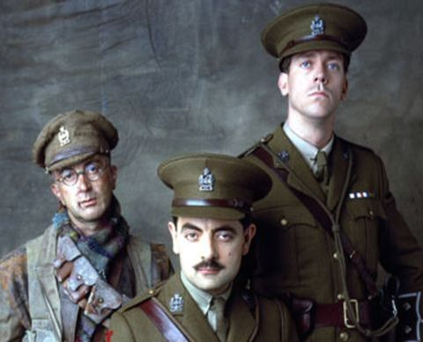
means—includes Winston Churchill! (Click here
for an interview with Dr. Whitlock on the history of
crime. [Dr. Whitlock's part begins at 17:22.]) UK CORE: Humanities/Global
Dynamics,
3.0 credits. |
![]() |
HIS 207 - History of Modern
Latin America (Dr. Francie Chassen-López) TR 2:00-3:15 Beginning with a short introduction on the legacies of three hundred years of Spanish and Portuguese colonial rule, we will examine the main currents and events in modern Latin American history from 1810 to the present. Using a variety of sources (primary, secondary, audio, and visual), we will explore the peoples and histories of the nations of the region in order to understand their differences as well as their similarities and, often, a history of troubled relations with the United States. (Click here for an interview with Dr. Chassen-López.) UK CORE: Global
Dynamics/Humanities, 3.0 credits. |
![]() |
HIS 230 - Hellenistic World
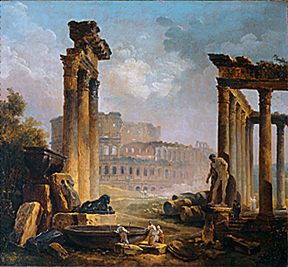
and Rome to Death of Constantine (Dr. Bruce Holle) MWF 10:00-10:50 An award-winning teacher with
a special interest in undergraduate teaching opens the
ancient world inside out. The
Hellenistic world, Rome, the death of Alexander, the
death of the Roman Empire. A lot of
death . . . and life . . . and a teacher who will know
your name. (Click here
to hear Dr. Holle speak about his own experiences in
college.) UK CORE: Humanities, 3.0 credits. |
![]() |
HIS 254 - History of
Colonial and Postcolonial Africa (Dr. Francis
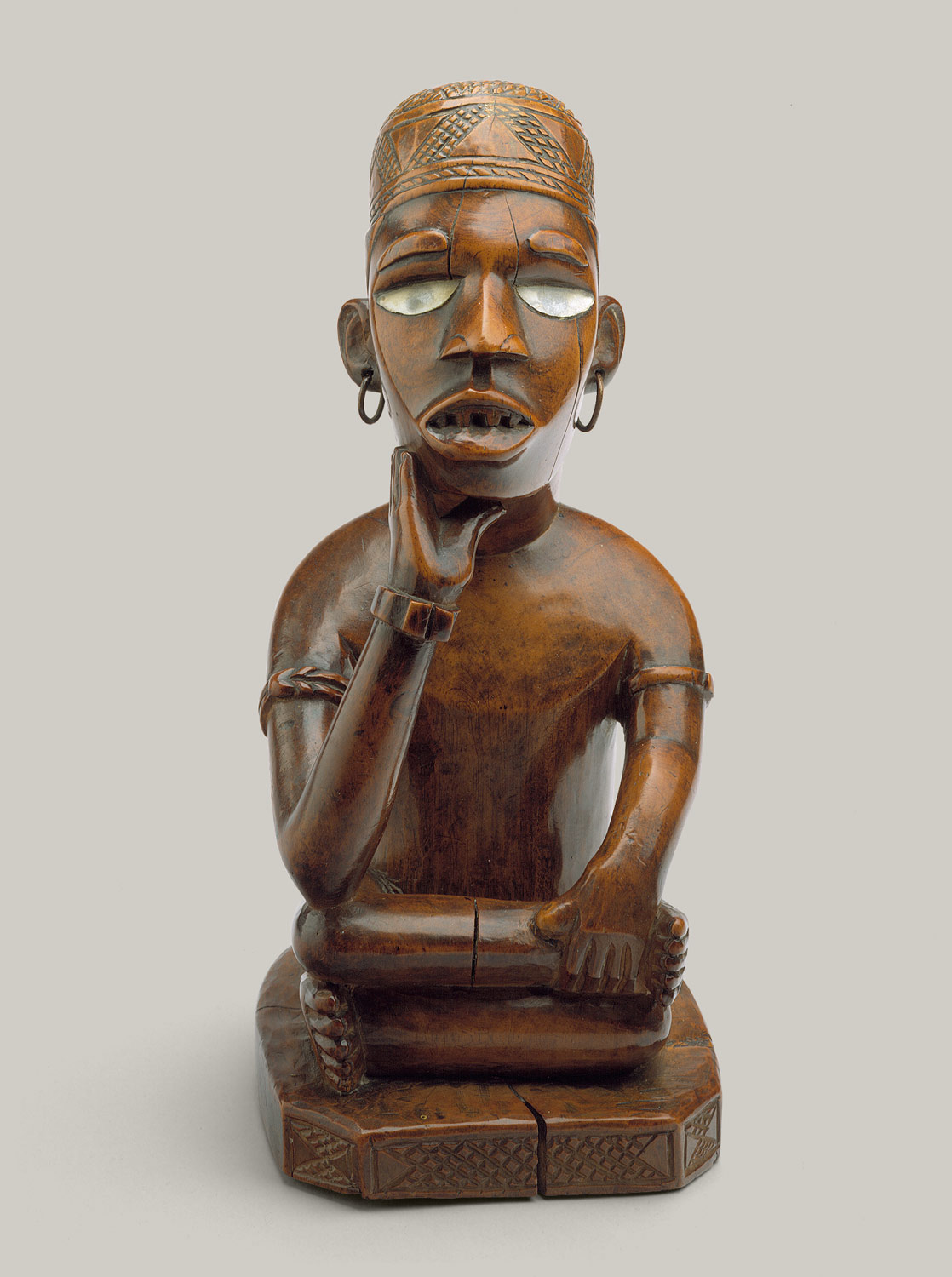
Musoni) TR 9:30-10:45 A history of Africa from the
onset of colonial rule in the 1880s to the present,
introducing students to the major social, political,
and economic developments that made Africa what it is
today. Topics include the European conquest of
Africa and Africans' responses, African nationalism
and struggles for independence, as well as
post-colonial African politics, culture, and economic
development. |
Other 200-Level Courses
TR 8:00-9:15 Covers more than two hundred
years of history, including the early challenges and
possibilities of the frontier, the terrible divisions
rent by the Civil War, Kentucky's unique position as a
border state, and the stereotypes that emerged in the
late nineteenth century and still persist today. Includes
Bluegrass music and Kentucky cuisine! |
Upper-Level Courses
HIS 320-401: Advance
Studies in American Military History M 5:30-8:00 Examines American military
campaigns and leaders in the broader context of U.S.
history. If
you’re in ROTC, this is the course for you! HIS 323: The Holocaust
(Ryan Voogt) Section 001: TR 2:00-3:15 Section 002: TR 9:30-10:45 Examines the events that
resulted in the virtual destruction of Europe’s Jews
during the Second World War, including a history of
anti-semitism, the ways in which Nazi policies against
Jews were implemented, Jewish resistance, and the
responses of non-Jews and other governments to the
Holocaust. HIS 351-001: Topics in U.S.
History - History Careers (Dr. Melanie Goan) TR 12:30-1:45 You dread the questions from
your parents and others: A history major? What are you
going to do with that?
This course enables students to articulate a
response, going beyond law and teaching to consider
all the possibilities a history degree offers. We will
strategize about how to best position yourself to make
your dreams reality, emphasizing the importance of
networking, study abroad, internships, and other
experiences outside the classroom. By the end
of the course, students will be prepared to sell their
skills to future employers in a variety of settings. HIS 351-002: Topics in U.S.
History - Life and Legacy of Martin Luther King, Jr.
(Dr. Gerald Smith) T 3:30-6:00 **NEWLY ADDED COURSE TAUGHT IN CONJUNCTION WITH UKC 181 (see above)** HIS 351-003: Topics in U.S. History - America and the Cold War, 1945-1991 (Dr. Mark Summers) TR 11:00-12:15 The Iron Curtain, a nuclear
arms race, the making of NATO, a wall in Berlin,
Coca-Colonialism, isolationism, Asialationism, the
Common Market, and uncommon sense. People get shot,
lawful governments get overthrown, public officials
lie like statistics, and we never learn to stop
worrying and love the Bomb. Lots of music and pictures! (Click here
for an interview with Dr. Summers; additionally, here
is an article on Dr. Summers the cartoonist.)
HIS 353: Topics in European
History - World War I and Memory (Dr. Karen Petrone
and Terri Crocker) Section 001: TR 3:30-4:45 (Western
Front) Section 002: TR 3:30-4:45 (Eastern
Front) This course will examine how the memory of
World War I formed, and the implications of that
memory today, using official war documents,
battalion diaries, fiction, movies, and
poetry to bring World War I to life and to provide
a window into what front line battles looked like
to the soldiers themselves. Taught in conjunction
with an optional study abroad opportunity in
France and Belgium during Spring break, enabling
students to travel to the front lines of the War (A&S
500, 1 credit hour). (Click here
to see Dr. Petrone speak about the memory of World
War I in contemporary Russia.) HIS 355-001: Topics in Non
Western History - Modern South Africa (Dr. Stephen
Davis) MWF 11:00-11:50 A specialist on South African
guides students through the region’s history, focusing
on the conflicts and resolutions that have made South
Africa what it is today.
HIS 355-401: Topics in Non
Western History - Gender in Latin America (Dr.
Francie Chassen-López) T 5:30-8:00
HIS 360: Race and Sports in
America (Dr. Gerald Smith) W 3:30-6:00 This
course examines the history of race and sports in
America since the nineteenth century from an African
American perspective, addressing cultural, historical,
political, and ideological issues and debates. (Click here
to see Dr. Smith talk about teaching.) HIS 391-001: Christians in
the Roman Empire (Dr. David Hunter) TR 9:30-10:45 Covers the changing status of Christians in the Roman Empire between 100 and 500 CE. Topics include heresies, persecution, definitions of doctrines and practices, the relationship to the Roman Empire, and more. (Click here to see Dr. Hunter speak about his own research on the historical origins of priestly celibacy.) HIS 461-001: The American
Revolution, 1763-1789 (Dr. Jane Calvert) TR 11:00-12:15 A rigorous and demanding
course taught in seminar format with a wide range of
extensive readings that focus on the disagreement
between Great Britain and the thirteen colonies, the
decision for independence, and the progress of
revolutionary change through the ratification of the
U.S. constitution. (Click here
to see Dr. Calvert speak about her research on John
Dickinson and Quaker Constitutionalism.)
HIS 543-001: German History
since 1918 (Dr. James Albisetti) MWF 11:00-11:50 This course examines the
history of Germany from the end of World War I to the
present, including the Weimar Republic, the Third
Reich, the occupation regimes after World War II, the
division between East and West, and a reunified
Germany since 1990, primarily focusing on political
and social history.
HIS 546-001: The Byzantine
Empire (Dr. Bruce Holle) TR 9:30-10:45 The Byzantine Empire from the
time of Constantine the Great to the fall of
Constantinople in 1453. Romans, Greeks, crusaders,
civil wars, Macedonians, Turks, Bulgars, and
iconoclasm—they're all in there along with an
assortment of two dozen other heroes and villains for
your historical enjoyment. The ancient world like you
never knew it before, taught by an award winning
teacher with a special interest in undergraduate
education. (Click here
to hear Dr. Holle speak about his own experiences in
college.)
MWF 11:00-11:50 Dr. Mark Summers presents . . . The Greatest Empire on Earth [the British Empire, that is]. Bigger than Lord Curzon's ego! More advanced the Wallace's Techno-trousers! With a supporting cast of . . . Zulus, Asante, Sepoys, Ghurkas, Memsahibs, Bureaucrats, upper class twits, Tommies, and Maxim guns. Subject peoples, object lessons, failures galore, and buckets of blood, along with a weekly assortment of music, movies, pictures, and occasional hopping and jumping (on tables) for good measure! (Click here for an interview with Dr. Summers; additionally, here is an article on Dr. Summers the cartoonist.)
HIS 563-401: History of
Women in Latin America (Dr. Francie Chassen-López) T 5:30-8:00 HIS 564-001: History of
Brazil (Dr. Erik Myrup) MWF 12:00-12:50 Introduces students to the historical roots of modern Brazilian society and culture, interweaving stories of slavery, gender, race, and nation building into a broader history of the modern world. Taught by an award-winning teacher who can’t sit still. Includes pictures, music, stories, and . . . cashew juice! (Click here for sample lecture; click here for an interview with Dr. Myrup; and click here to see Dr. Myrup talk about the use of technology in the history classroom.)
HIS 584-001: Health and
Disease in the United States (Dr. Eric Christianson) TR 3:30-4:45 HIS 595-002: Studies in
History - Slavery, Memory, and Public History (Dr.
Amy Taylor) W 1:00-3:30 From movies like "12 Years a Slave" and "Django Unchained," to the recent controversies over Confederate monuments, Americans have long grappled with the meaning and legacy of slavery in our present-day lives. Why has the remembrance of slavery been so fraught? How has the present continually impinged on the way we see and document the slave past? This course will take a "hands on" approach to these questions by examining the history and memory of slavery here in Lexington, Kentucky, and in particular, at the Waveland State Historic Site. Students will first research the history of the men, women, and children who were enslaved and later emancipated at Waveland by examining original documents and artifacts at Waveland, as well as at local archives and repositories, like the King Library's Special Collections and the Fayette County Courthouse. Then, as a class, we will piece together the story of slavery at Waveland in order to assist the site in developing its interpretation and tours. This course is open to all students but will be of particular interest to anyone who wants to explore ways of "doing" history beyond the traditional classroom setting. PLEASE NOTE: Any student who registers for this course must be available to travel to the Waveland Historic Site in Lexington (Nicholasville Road, past Fayette Mall) on multiple occasions during class hours. Any questions about the course may be directed to Dr. Amy Taylor. (Click here to watch Dr. Taylor on C-SPAN; and click here to watch her talk about teaching at UK.)
|
|
Graduate-Level
Seminars (open to advanced undergraduates)
|
Methods and Capstone
Courses (for majors)
|